Creating the Public Figure

The projects in this section focus on three celebrities featured in the journal and explore how their public personas are created—also in comparison to Town Topics’ competitor The New York Times. Celebrity culture is analyzed using the examples of the biographies of Harry Thaw, Evelyn Nesbit, and Alice Roosevelt. Also, it includes a broader description of parasocial relationships within high society.

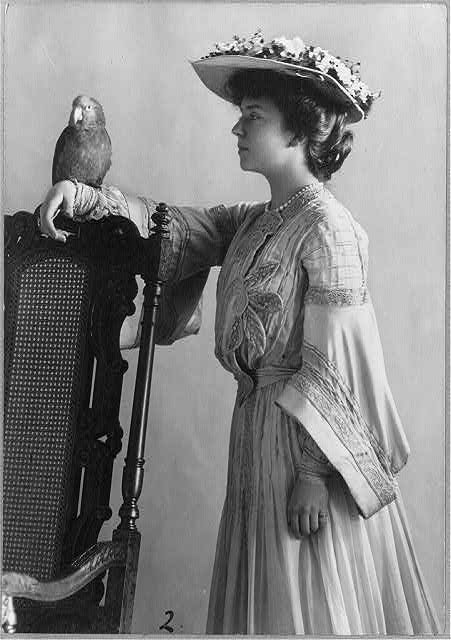
Library of Congress. no. LC-USZ62-71727. https://www.loc.gov/item/2003663418/.

The Princess of the White House - Alice Roosevelt’s Rise to Celebrity

Alice Roosevelt charmed and astonished the American nation from the first moment that she stepped into the limelight in 1902, a little while after her father, Theodore Roosevelt, took over the presidential office of the United States of America. The First Daughter of the land attracted the curiosity of the public, and, basking in the publicity, her life as an ordinary high society girl transformed while her renown quickly extended to the international stage. Alice’s spirited and headstrong character livened up the social rounds of the Washington and New York elite, and her eccentric pastimes were the talk of the town, delighting journalists and filling up the pages of newspapers. Naturally, Town Topics as “The Journal of Society” covered Alice’s doings and voiced its own opinions on her.

This project traces significant events in Alice Roosevelt’s life during the years 1902-1906 and contrasts the way contemporary newspapers wrote about her journey of fame. Noteworthy accounts from Town Topics are set side by side with entries from The New York Times to examine this inimitable making of a celebrity.

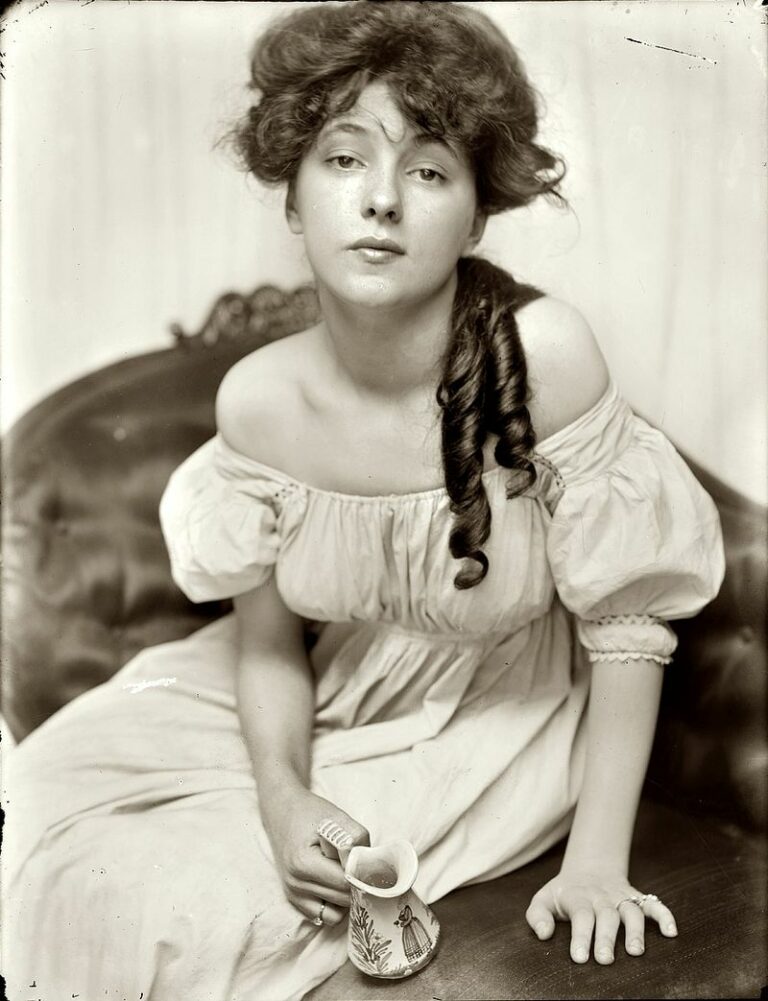
Wikipedia, https://de.wikipedia.org/wiki/Evelyn_Nesbit#/media/ Datei:NesbitKasebier.jpg

Framing Evelyn Nesbit: Gossip, Gender, and Scandal in Town Topics

This digital project explores the media representation of Evelyn Nesbit, an artist’s model, performer, and central figure in one of the most sensational scandals of the early 20th century, as portrayed in the American society magazine Town Topics.

Spanning the years 1905 to 1922, my project analyzes how Nesbit’s public image evolved before, during, and after the murder trial of her husband, Harry K. Thaw. Through Town Topics’ gossip columns, she was cast in a range of roles: the scandalous bride, the tragic victim, the ambitious performer, and ultimately a fading symbol of notoriety. With my digital timeline it highlights key articles, quotes, and shifts in tone to show how gender, class, and morality were negotiated through scandal journalism.

This project invites readers to critically examine how early celebrity culture in the United States of America used gossip not only to entertain but also to enforce societal norms and how one woman’s story was told and retold to reflect those anxieties.

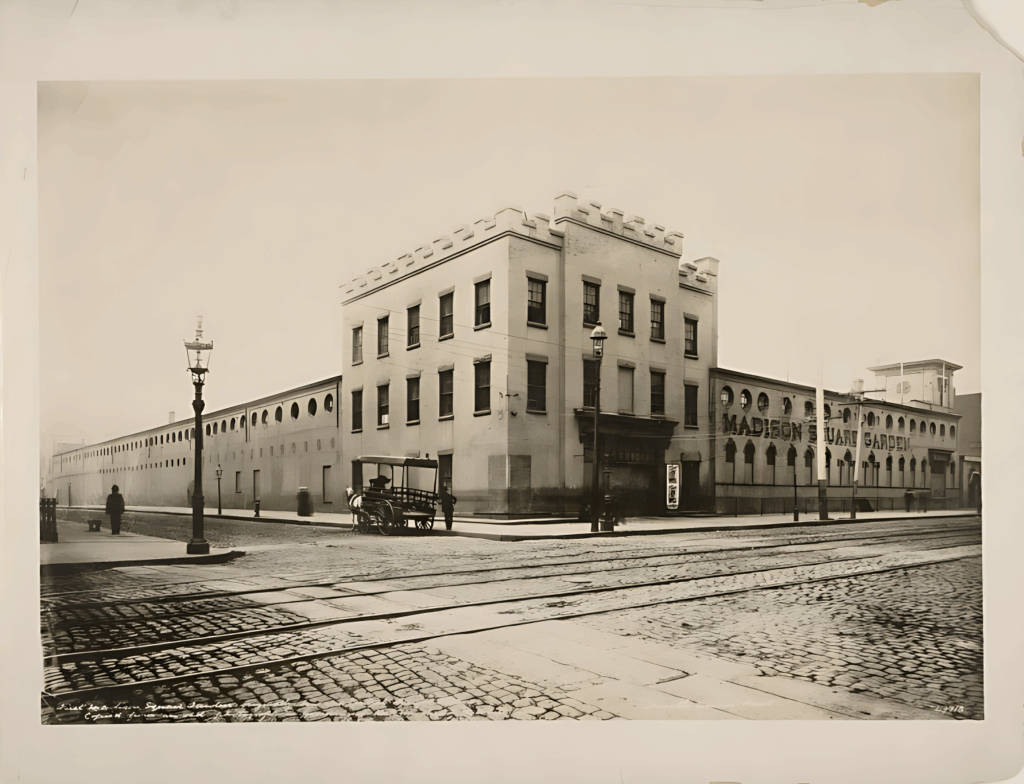
The New York Public Library. "Fourth Avenue front". Irma and Paul Milstein Division of United States History. https://digitalcollections.nypl.org/items/6892b0c0-c6cc-012f-411b-58d385a7bc34

Harry Thaw: Rich and Murderous

Harry Kendall Thaw, a rich and troubled individual, made national headlines when he shot architect Stanford White in what became known as “the murder of the century.” But starting long before the infamous murder trial, Harry Thaw had already drawn the eye of the press with a string of scandals which earned him a growing reputation—and a steady presence in the periodicals Town Topics and The New York Times. These two publications played a key role in shaping Thaw’s public image with both different but also at times overlapping portrayals of his character. This project explores the descriptive language used by Town Topics and The New York Times to construct—and reconstruct—Harry Thaw’s public image over time. By analyzing and visualizing the most frequently used descriptors from each magazine, it becomes clear how language shaped the narrative around Thaw.
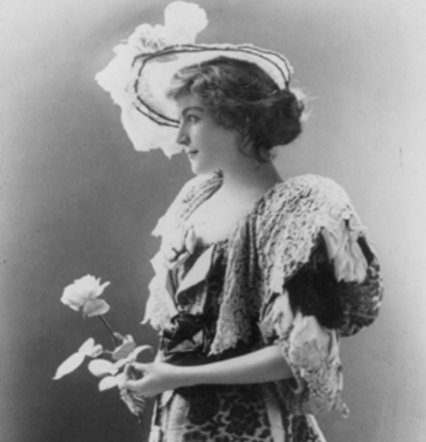
Library of Congress Prints and Photographs Division. B. J. Falk, photographer. Cora (Urquhart) Potter. https://www.loc.gov/item/2002698427/

Early forms of celebrity culture and parasocial relationships: The Case of Cora Potter


Parasocial relationships and celebrity culture are now an integral part of our media consumption society. But how did it come to be that, as a society, we developed such a fascination with media figures and public personalities—and beyond that, one-sided relationships with them, to the point where people feel as though they have a kind of friendship with individuals they don’t actually know?

This development began in the late 19th century, when people of public interest started to be featured in print media. The following project explores the concepts of parasocial interaction and parasocial relationships, as well as the origins of celebrity culture. To connect these ideas and build a bridge to the 21st century, you are invited to explore a fan account for Cora Potter, an 18th-century celebrity.


All content for educational purposes only.

University of Greifswald

Seminar: Editing Scandal
(Summer Semester 2025)

Instructor: Prof. Dr. Katrin Horn