Over the years, Town Topics voiced many opinions concerning socio-historical events and developments, always quick to comment on and evaluate New York’s upper class and its actions. This segment focuses on the depiction of mental illness, New Money vs. Old Money, and the influence of World War I on marketing and circulation of gossip within the journal. It analyzes social attitudes, questions of morality, and Town Topics’ influence on the discourse revolving around these subjects.
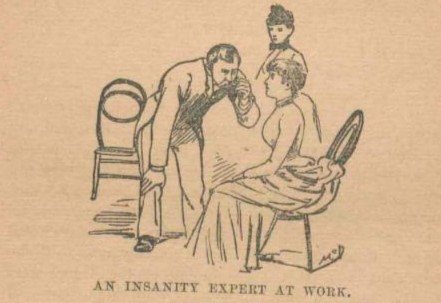
Alexander, J.W. National Library of Medicine. https://collections.nlm.nih.gov/catalog/nlm:nlmuid-101392816-img.
“The love for the poppy never dies” – The Discussion of Opium in Town Topics
A divisive topic throughout the 19th and 20th century, the habitual use of opium was as much discussed in New York high society as it was anywhere else. Be it in advertisements for rehabilitation facilities, theater reviews, short stories and poems, or scandals involving the drug—opium gets a mention on Town Topics’ pages again and again. The following timeline traces the history and social perception of the drug, specifically in 19th- and 20th-century America and as described in Town Topics, to illustrate the social climate that allowed it to flourish and ultimately be penalized.
Charles Deitz in his study ‘A Tomb for the Living’: An Analysis of Late 19th-Century United States Newspaper Reporting on the Insane Asylum demonstrates the role newspapers play in providing the public with information about mental asylums, the problem of stigmatisation and the shift of mental illness from a private matter into the public sphere, “Mental illness evolved from a private/family concern to one of public import over the course of the 19th century” (v). Town Topics: The Journal of Society, provides therefore an example of a somewhat contradicting phenomena where on one hand the language used adds to stigmatisation and marginalisation of mentally ill people, and on the other hand the marginalization occuring in the public sphere integrates the “lunatics” into everyday life of “normal” people. A database of excerpts from Town Topics: The Journal of Society that revolve around the topic of mental illness allows users a glimpse into shifting notions of mental health at the turn of the 20th century.
The Socialite’s Map—Ads and Travel Reports at the Onset of WWI
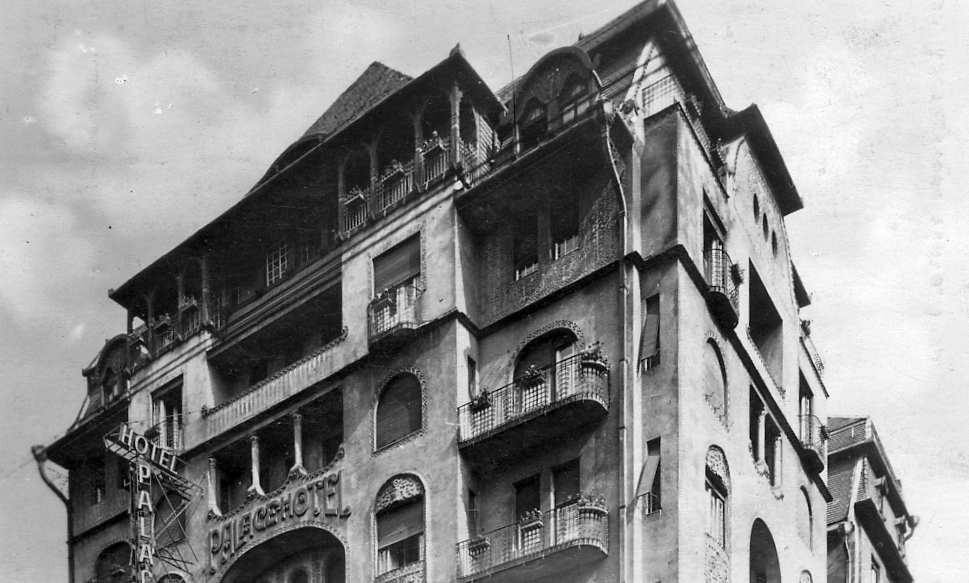
Any socialite of the early 20th century knew that relevance in the circles of high society meant showing up, being seen, and being known. As much as balls and dinner parties were occasions to make an appearance, so was travel. In the early 1910s, a New York City, NY, socialite might have spent the summer in Newport, RI, visited the hot springs of Virginia, and sailed to Europe, taking a room in Badrutt’s Palace Hotel, St. Moritz (Switzerland). But when World War I broke out, Europe became a war zone and American travel there was radically transformed.
This project lets you trace how this transformation is reflected in the pages of Town Topics via multiple interactive maps about hoteld ads and travel routes.
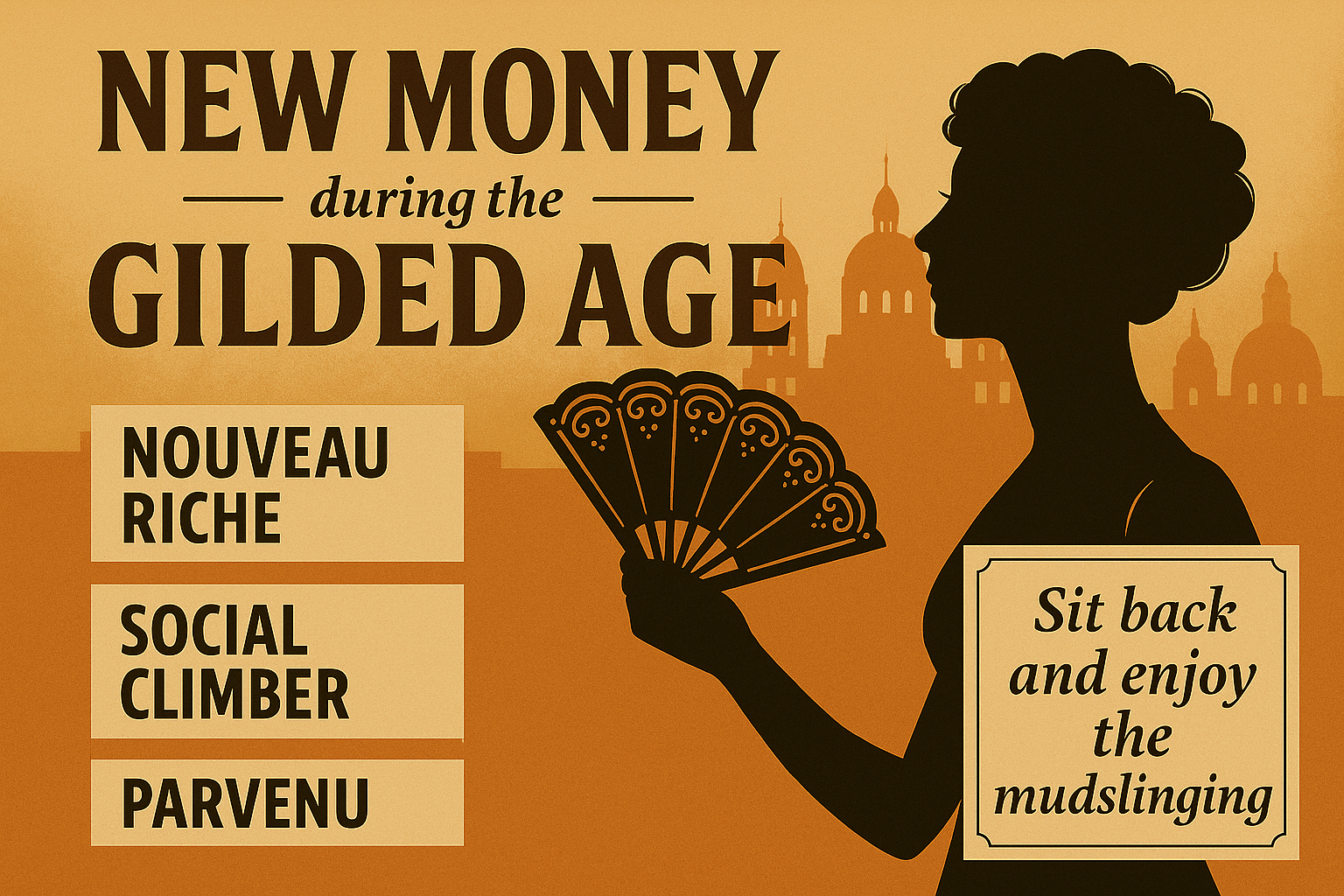
created with ChatGPT via the promt create a picture that fits the description
New Money during the Gilded Age
During industrialization, many people who had become wealthy through their investments in the economic sector, for example, factory work or the railroad business, moved to the cities. In these families, where the men often took care of business matters, the women frequently tried to make a name for themselves in high society and become part of the social upper class. If there was one thing other than work that New York’s elite 400 hated, it was the nouveau riche, who wanted to buy their way into high society, without family name, status, titles, or any sense of class, education, or taste. THE gossip magazine of its time, Town Topics, naturally did its best to ridicule the nouveau riche class. The terms “nouveau riche,” “social climber,” and “parvenu” have been repeatedly mentioned in Town Topics in connection with snappy comments and jokes on behalf of the nouveau riche. Let’s look at these very comments and jokes. Sit back and enjoy the mudslinging.