To understand the influence of Town Topics, this section focuses on the journal’s depiction of various events during the Gilded Age. It illustrates the evolution of advertisements and studies the magazine’s gossip columns—known as “Saunterer”—regarding, for example, its view and position on privacy. Lastly, one project examines whether Town Topics itself was responsible for its downfall by analyzing various libel cases.
How the Saunterer Gossips
The focus of this project is the variety of perspectives on gossip. “Saunterings” offers a valuable insight into the development of the press during the Gilded Age. The contemporary discourses around privacy view gossip critically, whereas a large part of the population supports the public exploitation of current happenings. These considerations are laid out here.
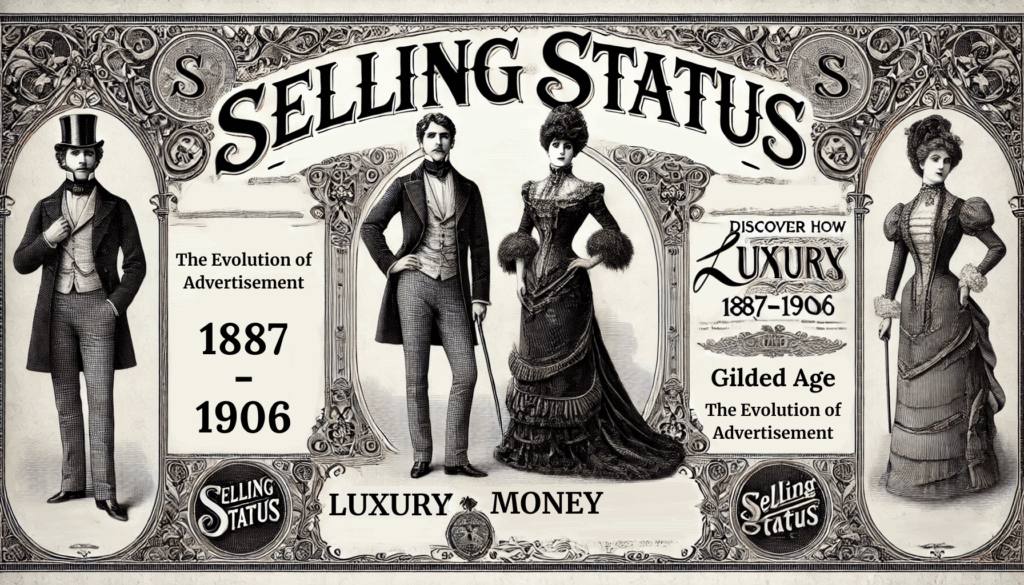
Selling Status — The Evolution of Advertising in Town Topics, 1887-1906
Around 1900, advertising developed into more than informing about products and their potential uses and effects—it was a display of identity, class, and power. In Town Topics, ads reflected and shaped ideals of luxury, gender, and status. This project explores how these advertisements changed between 1887 and 1906 in content, placement, and volume. Drawing on Veblen’s concept of conspicuous consumption, it analyzes how wealth was performed on the page. By digitizing one issue per year, the project makes visible how advertising mirrored and reinforced the social order of the Gilded Age.
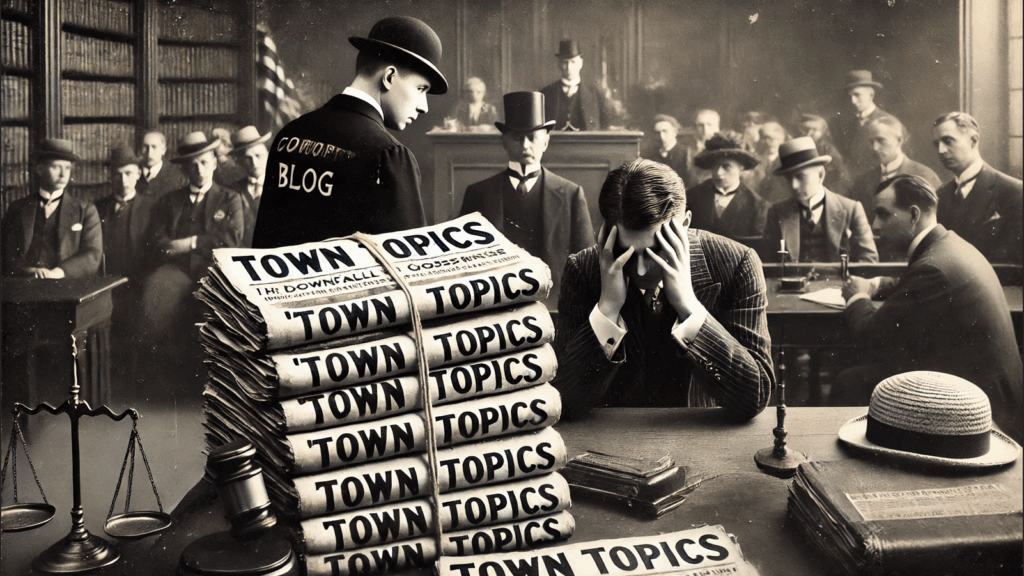
Whether there was a secret love affair, another couple that eloped or somebody’s latest fashion faux pas, it was almost certain that one magazine would cover it in their next issue. Town Topics: The Journal of Society was a notorious gossip magazine, known for its salacious coverage of high society and scandalous gossip columns. The magazine became infamous for its unethical practices, particularly blackmail and libel. This project investigates how a series of legal challenges, centered around libel and blackmail cases, led to the magazine’s downfall in 1937. This blog will focus on telling the most interesting parts of the story (embedded with juicy receipts), beginning with the Edwin Post blackmail case in 1905, which exposed the magazine’s corrupt practices and set the stage for its eventual collapse.