The Social Calendar
A (mostly) complete guide to making your entry into 19th-century high society
The idea of this project is to illustrate how the wealthiest of New York City’s elites mingled with each other. For the purposes of this, a time frame of ten years between 1890 and 1900 was examined and a representative calendar created.
The contents of the calendar are formatted in a way that attempts to capture the nature of Town Topics itself.
As the idea of social seasons is innately connected to debutante culture and the “business” of marriage, a brief section about this can also be found on this page. The central focus will be on the social events themselves and what might be important to know for a potential attendee.
The texts of this project are very consciously phrased to emulate the character of publications like Town Topics to give readers a glimpse into contemporary conduct literature and perhaps imagine themselves as a 19th-century socialite for just a brief moment.
The Social Season and Debutante Culture
The concept of social seasons came to the United States from Great Britain, and it is innately tied to the ideas of marriage and debuting daughters. Starting in the 18th century, and to an extent today, high society daughters were “debuted” to the King – or Queen – once they reached marriageable age. Being “debuted” in this instance means that the young women were now formal members of the society – and eligible for marriage proposals.
The first ball that can be considered a debutante ball was held in honor of Queen Charlotte in 1780 at St. James’ Palace.
These balls went through several stages of popularity and had declined in the 1820s but were brought back into public consciousness by Caroline Schmermerhorn Astor (Mrs. Astor) and Ward McAllister (Mr. McAllister). Their displeasure about the dilution of New York City-society with the arrival of the newly rich from the Midwest brought a renaissance of the social season and debutante culture to New York’s high society that would continue to throw waves well into the 20th century and even present time with debutante balls still taking place in 2025.
The coverage of the Bal des Débutantes in Paris in December 2024 allowed the average person a once rare glance into the glimmering lives of the highest of society. And much like 19th century readers of publications like Town Topics, present day readers gathered on online platforms to discuss the fashions and goings-on of the evening.
The social season that accompanied the debutante balls provided space to mingle and prepare the marital connections that were to be forged in the months to come. Young women and men were officially introduced into society in a controlled environment, but the months of social events also allowed for other types of mingling. Business connections, trade deals, and other bonds were set up on these nights. If you wished to make an entry into this society as an up-and-coming socialite, the winter months could feel like work rather than enjoyment.
It should be noted that a lot of these events commenced late in the evening, especially once dinners and balls were held in the same location. The Patriarch’s Ball routinely started at 10 PM, effectively excluding those who had to start their mornings early.
Contemporary sources make no explicit mention of people of color attending the events listed below. After the beginning of racial segregation following the Dred Scott v Sandford ruling, debutante balls for Black Americans can be found in New Orleans, for example.
A large part of the social scene in New York in the latter half of the 19th century was a group known as The Four Hundred. The 400 were a rather selective group of New York’s wealthiest. The group was led by Mrs. Astor, and for many years it was unknown who exactly was part of this elite circle. It wasn’t until 1892 when Mr. McAllister had a list of all members published in the New York Times that the broader public became aware of the names that mingled on this list.
The 400 notably did not include people of color or Jews. The ambition of this list, and the social season culture established by Astor and McAllister, was to create a society that matched their expectations of an acceptable society.
Conduct Literature
Conduct and advice literature date back to medieval times. In this time, the genre was aimed towards the literate elite, oftentimes directly advising heirs to various thrones on how to be good and fair rulers.
The modern wave of conduct and advice literature were intended for young women who, with the dawn of industrialization, begin to move further and further away from their families. The distance and the lack of instantaneous communication bring up a need for a different way of sharing information.
These early books and manuals contained information about running a household and general housewife etiquette. But aside from that, conduct literature also advises its reader on how to behave in society and, with that, sets rules for behavior.
Establishing written rules and guidelines for how a person should interact with the people around them allows those who previously did not have access to the orally communicated rules to adapt to them.
With the mass production of printed media and the emergence of publications like Town Topics, these rules and guidelines became available to an even wider audience. And with that came an audience that perhaps could not follow all the proposed guidelines. And in turn, the focus of advice literature appears to change from active participation to a passive one. By reading about how to conduct oneself in society, which events the aspirational idols attend, and what they do in their free time, the reader gains a chance to glimpse into previously entirely obscured and unattainable lifestyles.
The rising social mobility that comes with the development of industrialization towards the end of the 19th century, encroaching on the lives of the rich and famous becomes increasingly more feasible even for blue collar workers.
As the intention of the audience shifts, so does the focus of the media. By the time publications like Town Topics reach their audience, the focus of the publications appears to be more on gossip and entertainment rather than actual advice on how to climb the steep ranks of the social ladder.
The Calendar
The New York Season
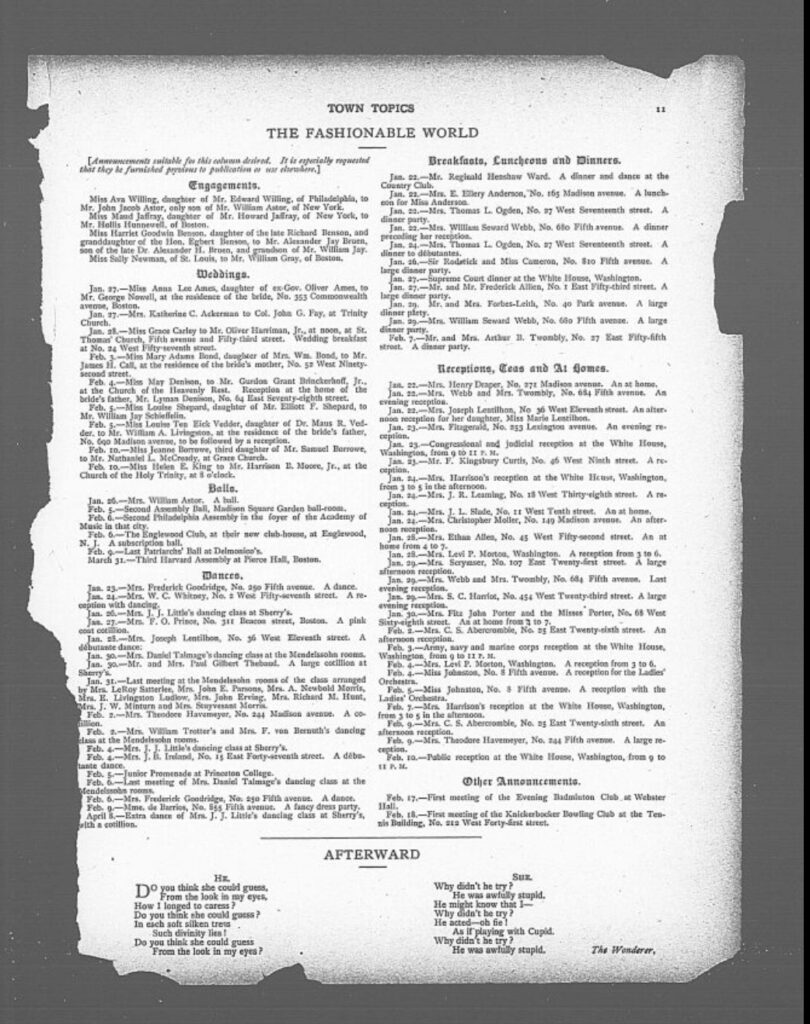
Image 1: Saunterer, The. “The Fashionable World” Town Topics, vol 25, no. 4, January 22, 1891, p. 11. Everyday Life & Women in America c.1800-1920, https://www.everydaylife.amdigital.co.uk/Documents/Detail/town-topics-v.-25-jan-june-1891/226007?item=226076
The rich and aspirational make use of the colder season to mingle in the city – where else would you go after all? They occupy themselves with social gatherings, dances, and dinners to keep the cold out and, of course, to forge new connections and foster old ones. If you would like to find your footing in that illustrious circle, I would recommend that you attend at least a few of these occasions.
The season has its unofficial start with the National Horse Show in November, while the opening of the opera season is seen as the official start. Throughout the winter months, you will have plenty of chances to attend social events. The social season in New York traditionally ends with Lent, after which the members of New York’s society go their own ways for a while before they will reconvene in Newport during the summer.
But aside from all the dancing and feasting, you would do well to mingle amongst your peers at more private occasions. It may be favorable to attend sewing classes and teas hosted in the homes of our esteemed friends.
November 10 — The National Horse Show
Location: Madison Square Garden
Traditionally, the first event of the social season commences with the National Horse Show. Even if you are not in the market for a new horse or carriage, attendance is highly recommended. The horse show is the perfect place to start mingling, as you will already have topics for conversation. And you may even spy one of the coveted 400 amongst the visitors. It is yet to be confirmed who will be in attendance, but, as every year, certain figures can be expected to make an appearance.
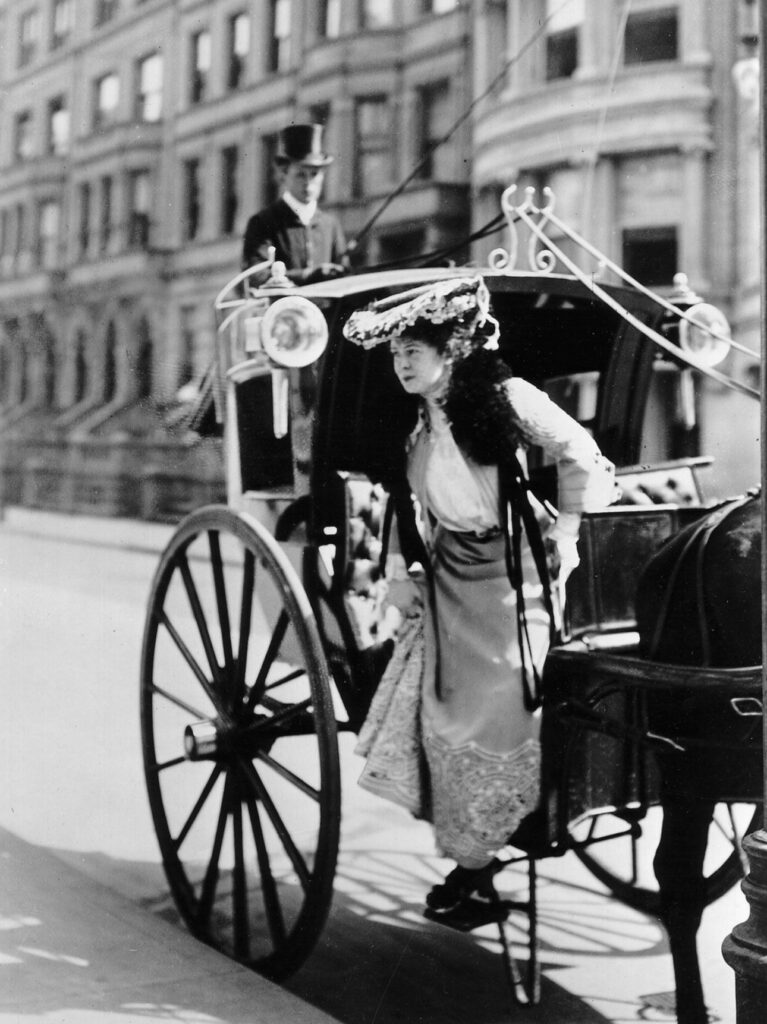
November 28 – Opening of the Opera Season
Location: Metropolitan Opera House
We all know that affording a box at the opera house is a feat in and of itself. If you are not in the fortunate position to have a forefather who already paid the dime for one, you may have to resign yourself to a regular seat. But do not feel defeated, a normal seat at the opening night of the metropolitan opera house is already an achievement.
Be sure to dress your best and follow the appropriate dress code – we wouldn’t want you to commit a faux pas this early in the season!
If, so far, you are inexperienced in the art of dancing, I would recommend attending one of the various dancing classes offered throughout the season. Perfecting the cotillion might not guarantee you a successful season, but it will improve your chances at a successful ball.
And if you already are a seasoned professional, attending a dancing class might be a good way to seek out potential dance partners for the rest of the winter.
If you are lucky and you manage to be accepted into one of the dancing classes that is vetted by Mrs Astor herself you will be tutored in more than just the basics of dancing. You will be instructed in manners and values. The instructors at Mrs Astor’s classes will provide you with everything you need to be an upstanding member of New York’s high society.
December 2 — Dancing Class
Location: Sherry's
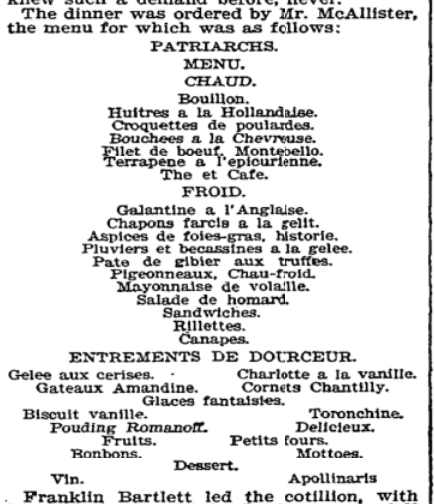
Image 3: “DANCE OF THE PATRIARCHS.” The New York Times, February 6, 1894, p.3, New York Times TimesMachine 1851-2002, timesmachine.nytimes.com/timesmachine/1894/02/06/106866465.html?pageNumber=3. Accessed 22 June 2025.
December 8 – 1st Patriarch’s Ball
Location: Delmonico’s
Mr McAllister’s Society of Patriarchs has held its ball since 1886 and with every year that passes, invitations become more and more coveted.
The twenty-five members of the Society of Patriarchs are entitled to invite nine guests to the ball – four ladies and five men. The tight-knit circle of the Patriarchs – all hand-picked by Mr McAllister himself – is meant to be at the forefront of New York’s society.
Being invited to one – or even multiple – of these balls is a testament to your status in this society and will surely only be of benefit for you.
The Patriarch’s Balls are the grandest balls in the season. Mr McAllister puts a great amount of care and labor into organizing the best event he can and each year the balls only seem to become more grand and awe-inspiring.
In recent years, members of the European aristocracy have been invited to the balls, making the guest list even more exciting.
A second ball will be held on January 20th.
The counterpart of the gentlemen’s Society of Patriarchs is the equally coveted group known as the Matriarchs. The group of women, under the guiding hand of one Mrs. Astor, have decided to organize their own ball.
The invitations for this event follow similar stipulations as those for the Patriarch’s and require an equal amount of status for you to even be considered worthy.
Similar to the Patriarch’s Ball you will find not only dance, but also enjoy the finest dishes amongst the finest company of the city.
A competing event to both the Patriarch’s and Assembly Balls is the Ihpetonga Ball in Brooklyn.
The Assembly will hold another ball on January 9th.
December 12 – 1st Assembly Ball
Location: Waldorf Hotel
December 13 – 1st Friday Subscription Dance
Location: Delmonico‘s
Much like the balls mentioned previously, subscription dances are an invitation-only occasion. However, even less prestigious members of society are able to attend these events, as you may subscribe to attend said dances. This, of course, means that you need to possess the financial means if you wish to purchase a subscription.
As with the Patriarch’s and Assembly Ball you are entitled to extend a number of invitations with your subscription.
The prices and number of available subscriptions vary each year.
The charity ball this year will benefit the Nursery and Child’s Hospital. Seeing as it is held at the Astoria, you can expect a most grand experience. You will have a choice of seats available, although the better seats such as the first tier boxes will likely be occupied by the generous donors.
January 07 – Annual Charity Ball
Location: Astoria Hotel
The Newport Season
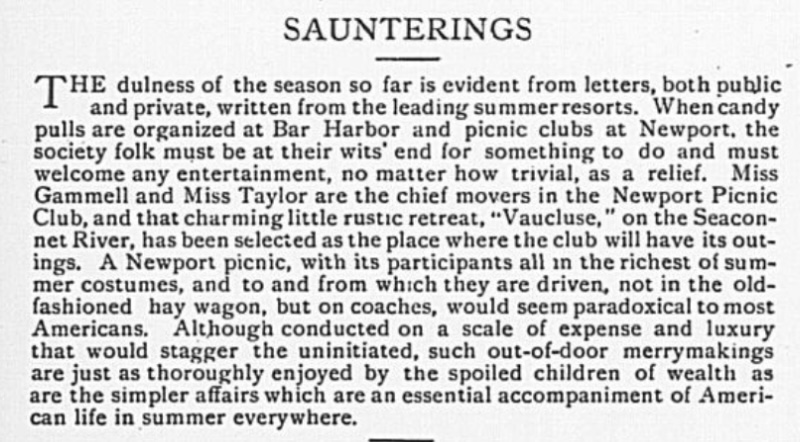
The truly wealthy do not spend their summers in the city. If you wish to summer like the 400, you should perhaps consider investing in a residence in Newport, RI. The seaside town is especially pleasant in the summer months.
Here you’ll be able to mingle among the country’s wealthiest. Among others, the Astors and the Vanderbilts are known to spend the warmer months in Rhode Island.
Maybe you will be one of the fortunate individuals who will be invited to dine at the Breakers, the Vanderbilts’ quaint 70-room summer cottage.
This year, Miss Gammell and Miss Taylor have organized a Picnic Club that will meet by the Seaconnet River. There will be multiple other picnics throughout the summer that you may wish to attend, for example the ones hosted by Mr. and Mrs. Belmont at Grey Crags.
Be warned, though, that making an entry into Newport may be difficult. Many attempt to climb the social ranks here and competition will be fierce, but do not be discouraged. Newport is where new and old money come together for games of cricket and riverside picnics. The entry fee into this circus – the cost of the construction of your summer home – will be well worth it.
By now, though, many of the younger folk have taken to Europe as their vacation destinations, but you could still try your luck in Rhode Island.
The summer season in Newport runs from July to September., giving you plenty of time to take a rest from the strenuous socialising and mingling you’ve done over the summer.
It is advised that you spend your time off making preperations and arrangements for the upcoming season in New York. It is better to have invitations sorted out early than to be the odd one out come November.
By Franziska Schnitzler,
I want to thank the anonymous reviewer for their helpful feedback, and Sarah Elisa Heine for their technical support.

All content for educational purposes only.
University of Greifswald
Seminar: Editing Scandal
(Summer Semester 2025)
Instructor: Prof. Dr. Katrin Horn