Selling Status — The Evolution of Advertising in Town Topics, 1887-1906
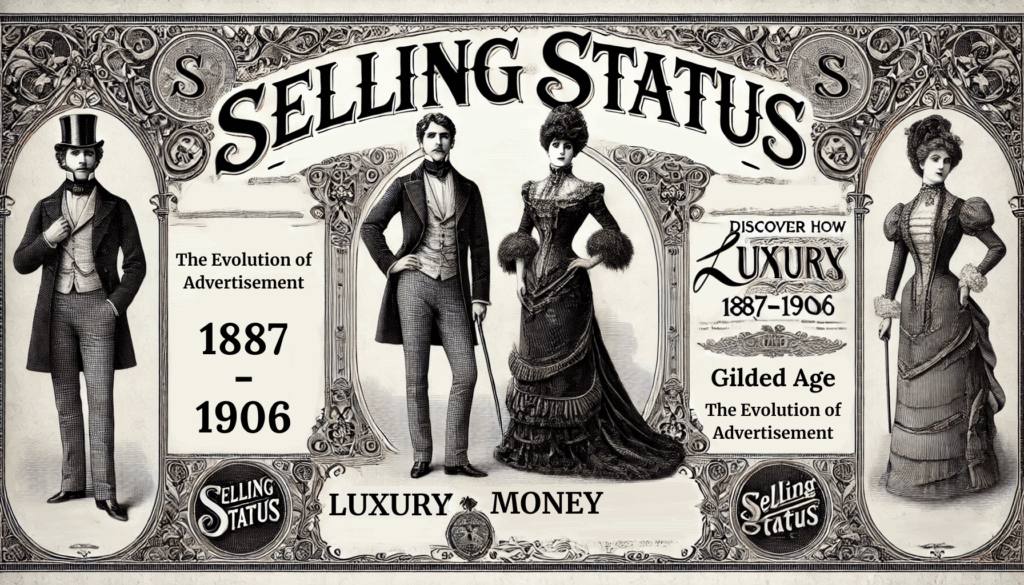
Around 1900, advertising developed into more than informing about products and their potential uses and effects—it was a display of identity, class, and power. In Town Topics, ads reflected and shaped ideals of luxury, gender, and status. This project explores how these advertisements changed between 1887 and 1906 in content, placement, and volume. Drawing on Veblen’s concept of conspicuous consumption, it analyzes how wealth was performed on the page. By digitizing one issue per year, the project makes visible how advertising mirrored and reinforced the social order of the Gilded Age.
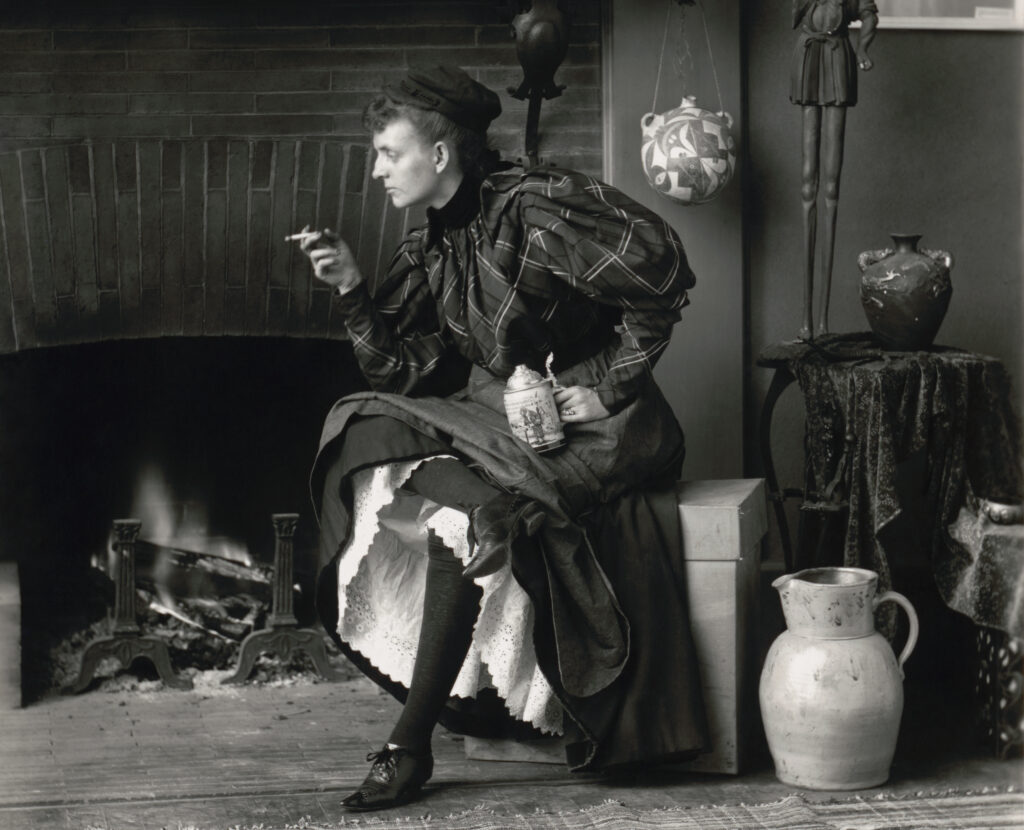
Library of Congress Prints and Photographs Division, Washington, D.C. Benjamin Johnston, Frances.
The Many Faces of Women in the Gilded Age — Gibson Girl, New Woman, Suffragette
In the United States of the late 19th and early 20th century, women became increasingly visible in public spaces through the appearance of new leisure activities and consumer culture, brought about by developments such as tremendous economic prosperity, industrial and technological progress, new social movements. These circumstances paved the way for the evolution of new female gender ideals which solidified themselves in the form of certain female archetypes. The Gibson Girl, the New Woman, and the Suffragette were an aesthetic, a socio-cultural, and a political phenomenon, respectively, and all described white, middle-class women from a younger age to roughly middle age. This projects studies the reception and portrayal of the three characters in Town Topics by analyzing the journal´s use of attributes, phrasing, tone, etc. when discussing them to answer the question whether being called a Gibson Girl, a New Woman, or a Suffragette was something to be aspired to or be avoided.
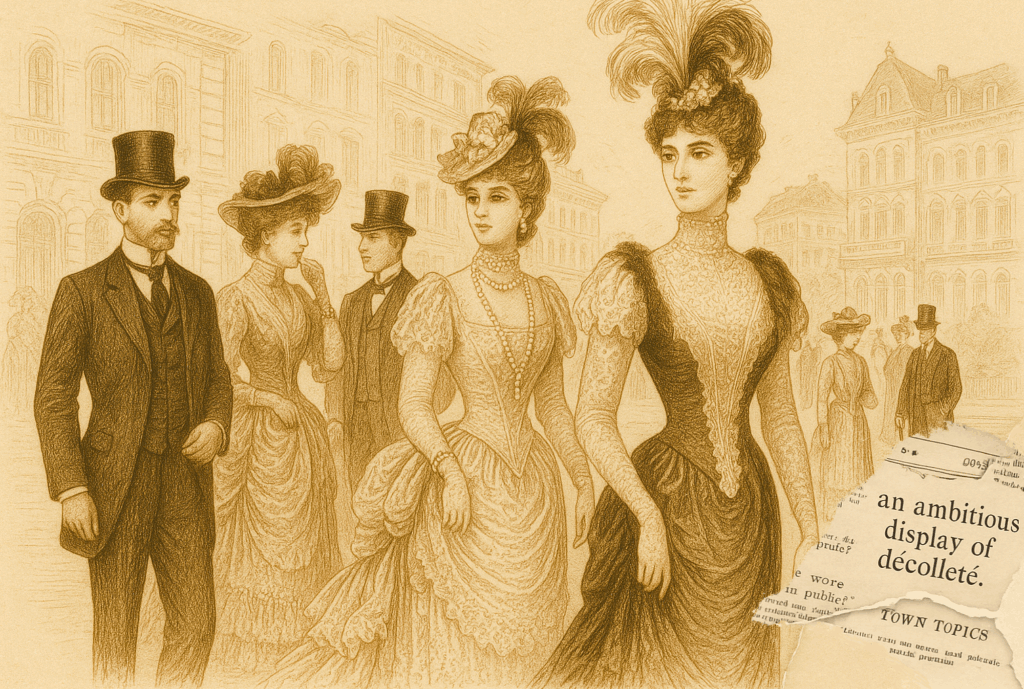
created with ChatGPT via the prompt Concept for homepage image of elite society late 1800s, landscape, light colors, Gilded Age style illustration (like old Harper‘s Bazaar fashion plates)
Hemlines & Headlines
Step into the stylish (and cutthroat) world of Town Topics, a New York society magazine that turned gossip into social regulation. Behind its witty tone and polished phrasing was a sharp eye for missteps, especially regarding how the wealthy dressed and broke unspoken rules. In the Gilded Age, fashion was used to signal status, and it quickly became a tool for policing society. Using theories from Maureen E. Montgomery’s Displaying Women and Thorstein Veblen’s Conspicuous Consumption, the collection, in the style of an online tabloid or magazine, looks at how Town Topics both reflected and reinforced class expectations in the Gilded Age, especially for women. Because in this world, fashion could make or break someone.
Alexander, J.W. National Library of Medicine. https://collections.nlm.nih.gov/catalog/nlm:nlmuid-101392816-img.
“The love for the poppy never dies” – The Discussion of Opium in Town Topics
A divisive topic throughout the 19th and 20th century, the habitual use of opium was as much discussed in New York high society as it was anywhere else. Be it in advertisements for rehabilitation facilities, theater reviews, short stories and poems, or scandals involving the drug—opium gets a mention on Town Topics’ pages again and again. The following timeline traces the history and social perception of the drug, specifically in 19th- and 20th-century America and as described in Town Topics, to illustrate the social climate that allowed it to flourish and ultimately be penalized.